
Care matters. It is a complex and important issue that affects everyone at some point in their life.
The Centre for Care provides accessible evidence on care to inform changes that could improve the lives of millions of people.
The Centre for Care links experts on care in 5 universities, 3 major charities and the UK’s Office for National Statistics.
Funded as an ESRC Research Centre to address the need for evidence on care that can make a difference, we have built a large research team to co-produce excellent research on care topics that really matter. We work closely with partner organisations in the care sector and people with direct experience of care.
Search our content
Keep up to date with our work
For regular updates from the Centre for Care team, follow us on Twitter @CentreForCare and enter your email address here to sign up for our newsletter.
Latest Updates
News and latest content from the Centre for Care
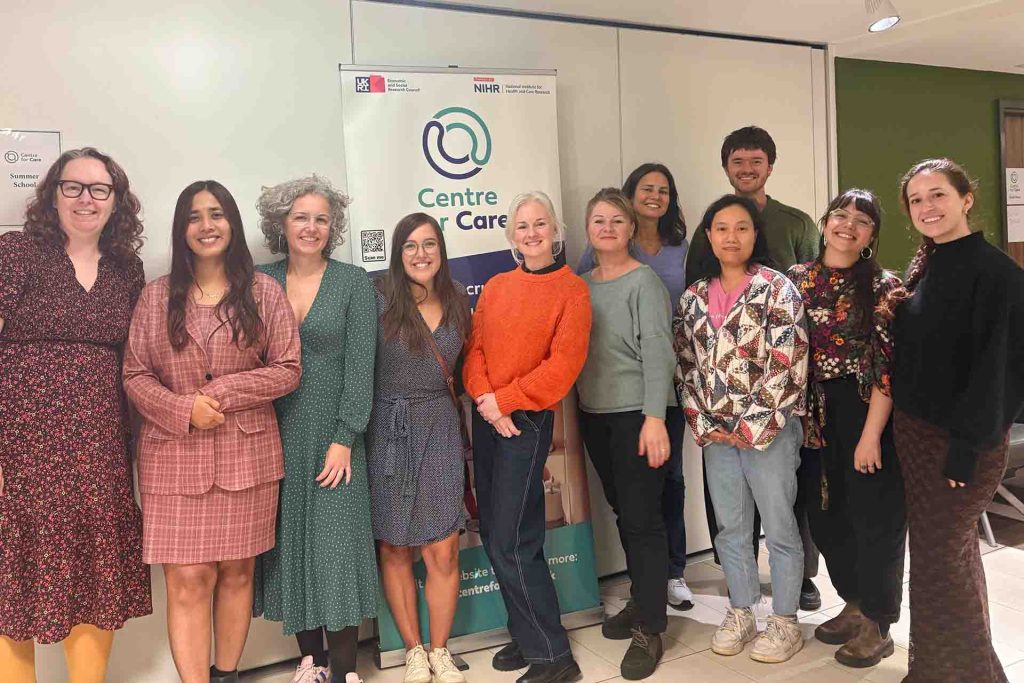
A guest commentary from our wonderful Summer School 2026 attendees! They reflect on their time with us in Sheffield sharing key takeaways from the week-long event.
Read More about What happens when care scholars come together? Reflections from the Centre for Care 2026 Summer School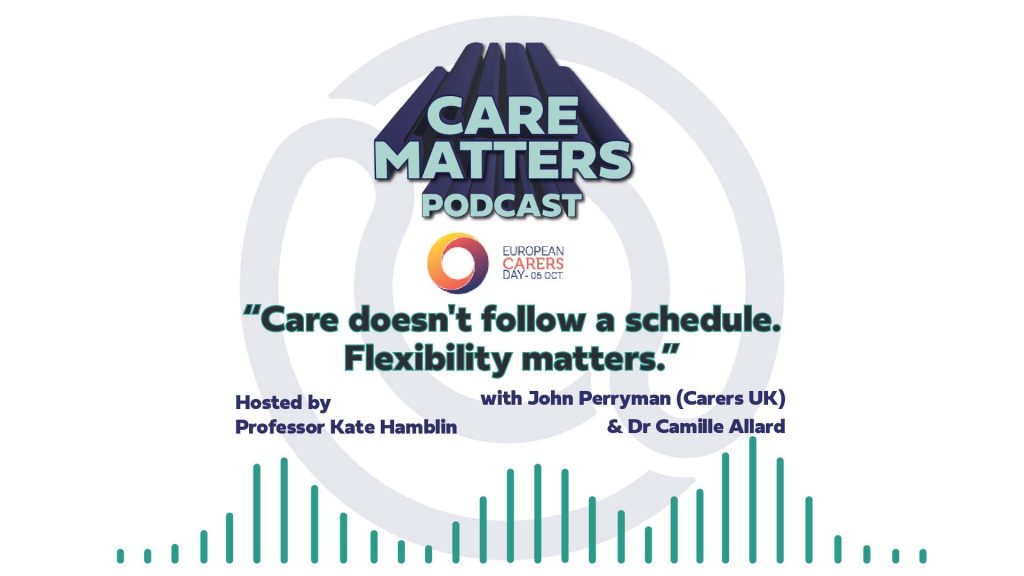
Professor Kate Hamblin explores the European Carers Day 2026 theme: “Care doesn’t follow a schedule. Flexibility matters.” She is joined by John Perryman and Dr. Camille Allard
Read More about Podcast: European Carers Day 2026: “Care doesn’t follow a schedule. Flexibility matters.”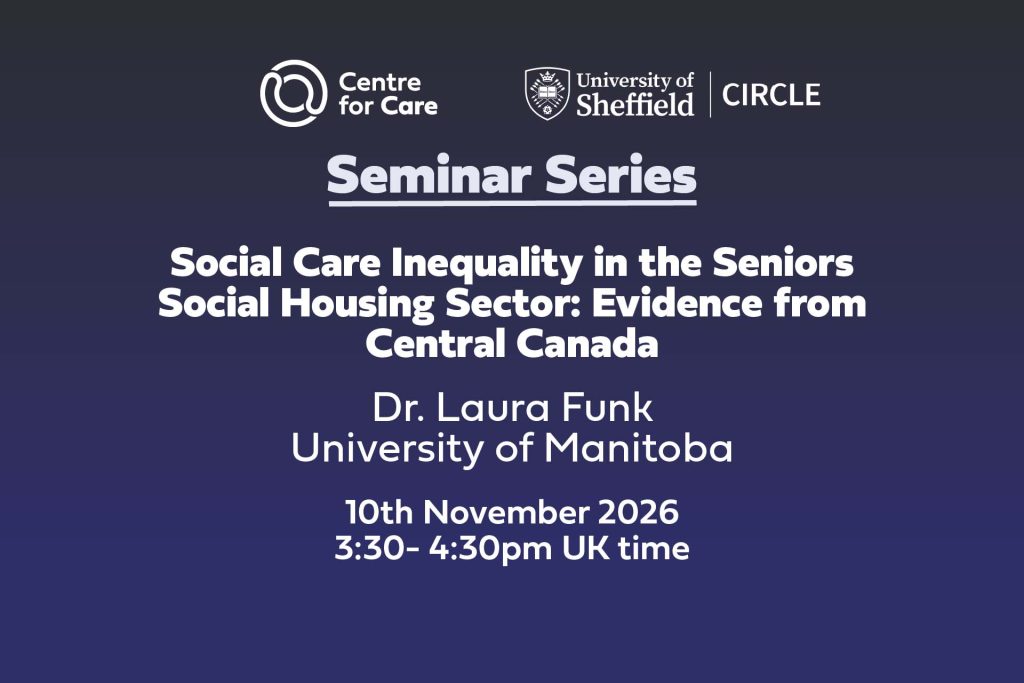
Dr. Laura Funk from the University of Manitoba to present ‘Social Care Inequality in the Seniors Social Housing Sector: Evidence from Central Canada’
Read More about Seminar: Social Care Inequality in the Seniors Social Housing Sector: Evidence from Central Canada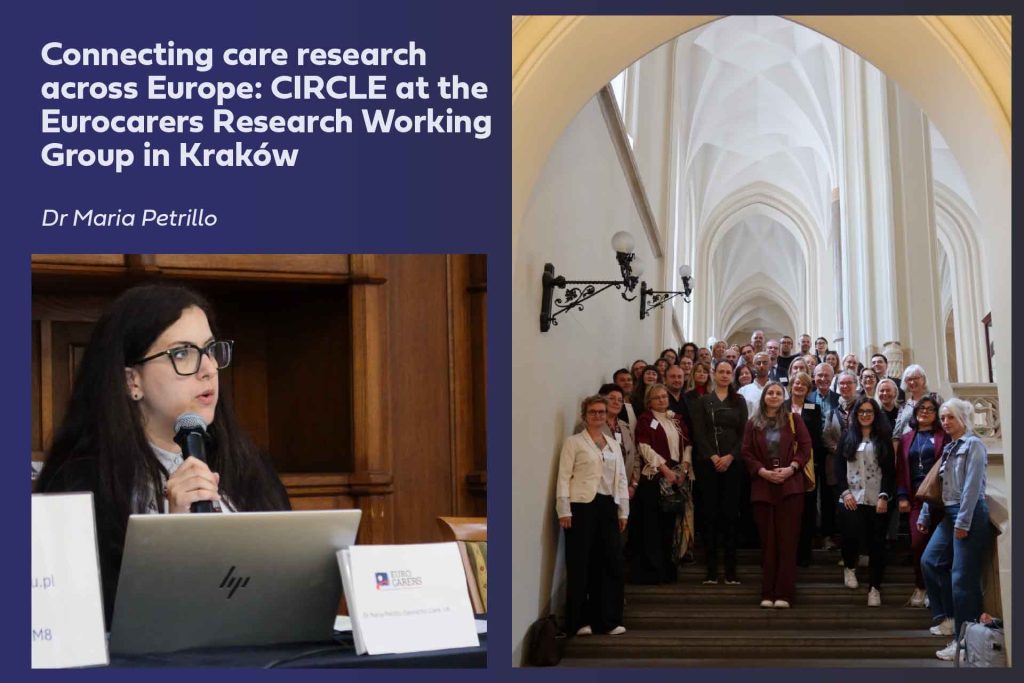
Dr Maria Petrillo attended a Eurocarers Research Working Group meeting and conference in Kraków, Poland. Read her account of the trip here.
Read More about Connecting care research across Europe: CIRCLE at the Eurocarers Research Working Group in Kraków
Commentary
Our latest commentary pieces
Professor Shereen Hussein responds to the Prime Minister’s 2026 Labour Party conference speech, in which he spotlighted some of the challenges faced by workers in the care sector.
Read More about The National Care Service and the care workforce: What does the research tell us?
Dr Duncan U Fisher and Professor Liam Foster examine the Health and Social Care Secretary’s recent announcement on creating a National Collective Pension Scheme.
Read More about The National Collective Pension Scheme: a better future for social care workers?
Centre for Care Impact Specialist Fay Benskin reflects on the key topics around care that emerged during the Labour Party 2026 conference.
Read More about Shaping the Future of Care: Centre for Care reflections on this year’s Labour party conferenceA guest commentary from our wonderful Summer School 2026 attendees! They reflect on their time with us in Sheffield sharing key takeaways from the week-long event.
Read More about What happens when care scholars come together? Reflections from the Centre for Care 2026 Summer School
Explore our cross-cutting Research Themes


Exploring how digital technology, care and caring relationships intersect and interact.
Read moreabout Digital Care: roles, risks, realities and rewards
Improving the social care data and analytical infrastructure.
Read moreabout Care Data InfrastructureExplore our Research Groups

Here we explore experiences of care at different life stages, when families are geographically dispersed and as people experience different parts of the care system.
Read moreabout Care Trajectories and Constraints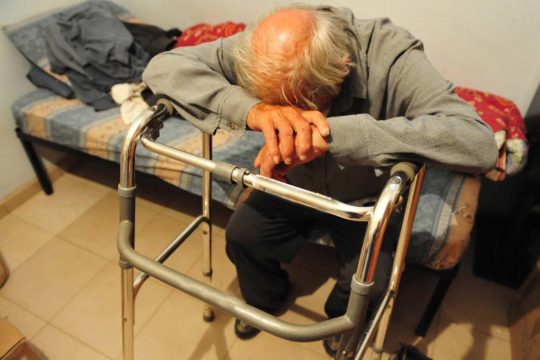
We use statistics and link data to study how socio-economic, health and other inequalities shape experiences of care for groups and individuals in different places and over time.
Read moreabout Inequalities in Care
We study change, innovation and challenges in paid care work: recruitment, organisation, conditions, digitalisation and their effects on job and service quality.
Read moreabout Care Workforce Change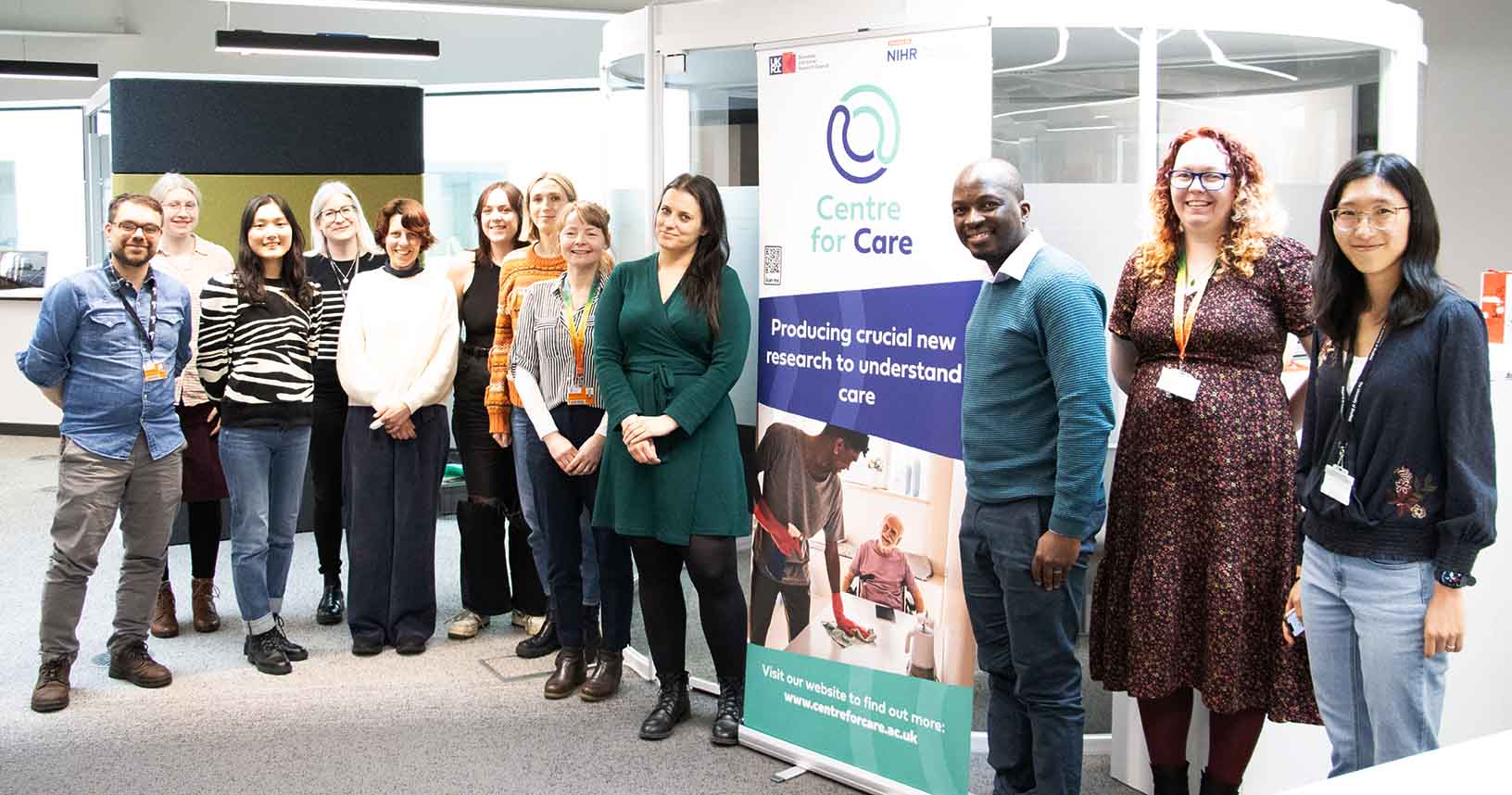
Who we’re working with
The Centre for Care links experts on care in 5 universities, 3 major charities and the UK’s Office for National Statistics.