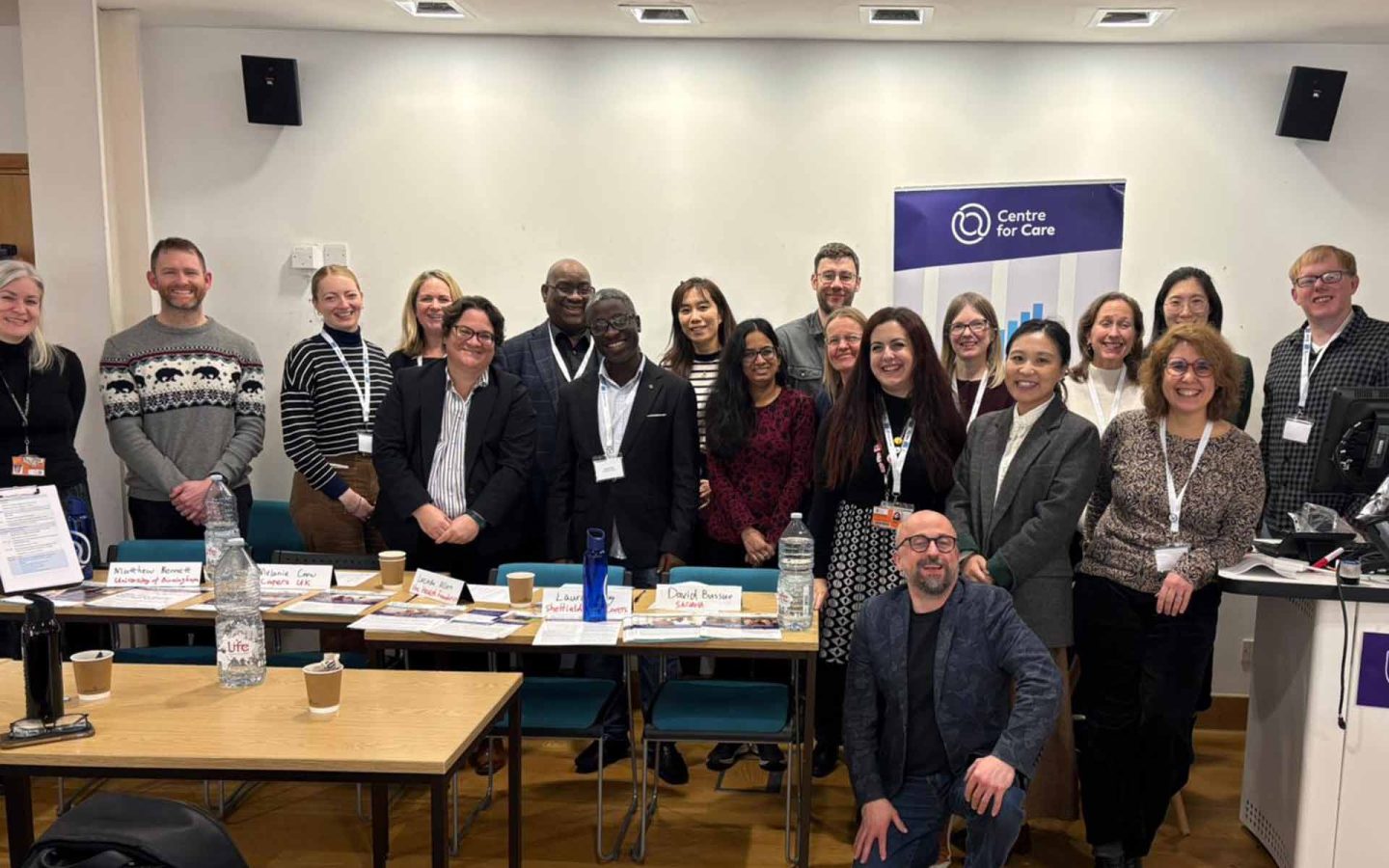
On 15th and 16th December 2025, a growing community of quantitative care researchers convened in Sheffield for the second QAR-Net Care workshop. Under the theme “Care and Inequality: Bridging Research and Practice”, the event brought together UK-based and international scholars from Ghana, France and Germany, alongside key stakeholders from charities, think tanks, and frontline practice to foster interdisciplinary dialogue and knowledge exchange on care inequalities. This event was jointly funded by the ESRC Centre for Care and the Higher Education Innovation Fund (HEIF).
The workshop opened with an inspiring keynote by Professor Athina Vlachantoni from the University of Southampton on “Unmet Need for Social Care: Patterns, Trends and Policy Implications”. Her talk traced the development of research on unmet need and highlighted critical directions for future inquiry. It was followed by three thematic sessions:
- Young Carers: Professor Anne McMunn (on behalf of Dr Becca Lacey) and Dr Christian Deindl shared evidence from England and Germany, respectively, on inequalities faced by young carers. Anne also shared findings from a study on the health impacts of “sandwich” caregiving.
- Health and Service Use: Presentations by Dr Baowen Xue, Dr Rubab Ahmed, and Dr Enrico Pfeifer explored how informal caregiving shapes cognitive health, unmet healthcare needs, and health behaviours, respectively. Mr Daniel Offei contributed to an international perspective from Ghana, examining willingness-to-pay for outsourcing long-term care services.
- Data and Innovative Methods: Professor Jonathan Scourfield introduced a new administrative data linkage project in Wales. Dr Virginia Mellado shared insights from French data on paid family carers. Dr Daniel Valdenegro demonstrated how Hansard data and large language models can enrich our understanding of social care.
The second day began with a thought-provoking keynote by Professor Gwilym Pryce from the University of Sheffield titled “Towards a New Economics of Care”. He identified research gaps at the intersection of economics and care and proposed five key questions to guide future work. Two thematic sessions followed:
- Formal Care: Dr Jingwen Zhang examined patterns of care home utilisation. Dr Vasudha Wattle analysed market concentration and quality in specialised care.
- Socioeconomic Inequality in Care: Dr Sean Urwin and Dr Yanan Zhang explored the economic consequences of informal caregiving, focusing on presenteeism and employment transitions, respectively. Dr Maria Petrillo presented on gender gaps in informal caregiving and how these vary by cohort, poverty, and deprivation.
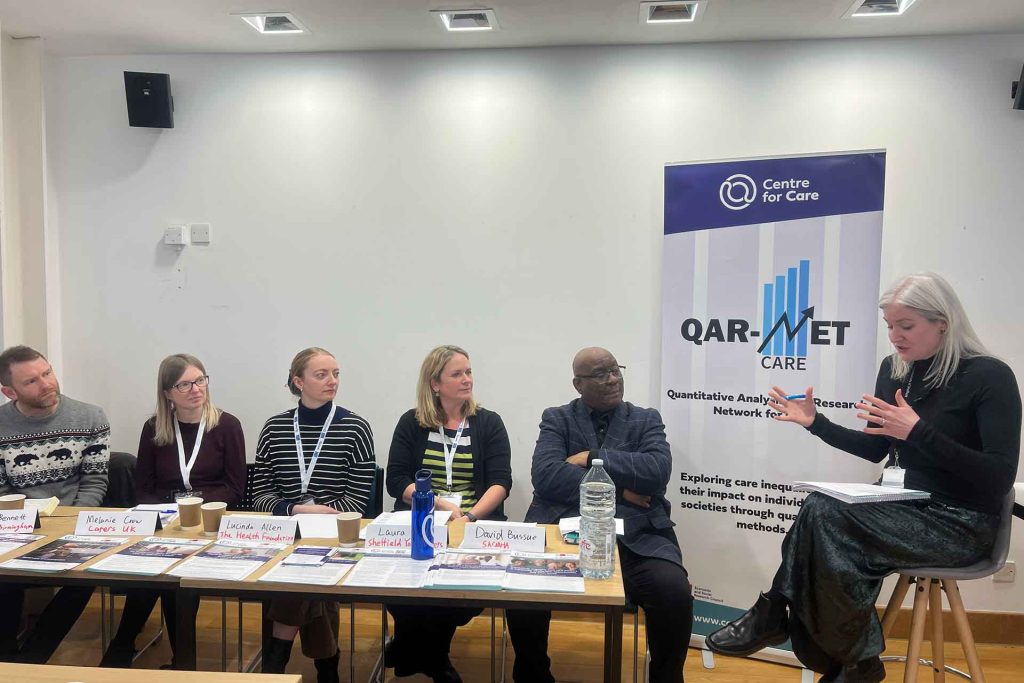
The workshop concluded with a two-hour panel that brought together researchers and policy and practice stakeholders, to explore current challenges in social care, opportunities for collaboration between researchers, charities, and practitioners, and evidence gaps and priorities for future work. The session was chaired by Professor Kate Hamblin, Director of the ESRC Centre for Care, and panellists included Melanie Crew (Carers UK), David Bussue (SACHMA Health and Social Care), Laura Selby (Sheffield Young Carers), Lucinda Allen (Health Foundation), and Professor Matt Bennett (University of Birmingham). Panellists emphasised the importance of mutual respect, ethical engagement with carers with lived experience, and early involvement of partners as foundations for sustainable and impactful collaboration.
Click here to view the full programme and abstracts (tagged PDF).
The Quantitative Analysis and Research Network for Care (QAR-Net Care) is an innovative initiative designed to address the existing gap in care research by emphasising quantitative methodologies. If you are interested in attending our future event, please use our contact form here to express your interest in joining the network.
About the QAR-Net Care chairs

Maria leads and co-develops data-driven policy tools, including the Unpaid Care Dashboard, and co-directs the Quantitative Analysis and Research Network for Care (QAR-Net Care). She is an ONS Accredited Researcher, an Associate Fellow of the Higher Education Academy (AFHEA), and collaborates widely across academia, government, and the third sector to ensure research translates into meaningful policy impact.
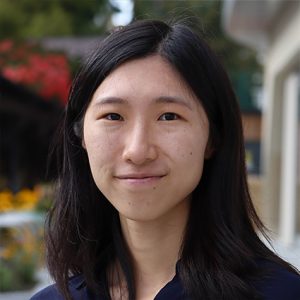
Jingwen is a Lecturer in Sociology at the University of Manchester and a co-lead of the Quantitative Analysis and Research Network for Care (QAR-Net Care). Previously, she worked as a research associate at the ESRC Centre for Care, the University of Sheffield, focusing on care data infrastructure and care inequality. Her research interests include ageing, inequalities in health and care, gender, and life course, with a focus on quantitative methods. Her current research focuses on “Unmet needs for long-term care in both UK and Chinese contexts” and “Explaining inequalities in providing and receiving unpaid and paid care”.