This piece comes following a period of transition for the Digital Care and Innovation theme. The Digital Care Theme has been a part of the Centre since the award of funding in 2022, led at that point by Professor Kate Hamblin. Since January 2025, the theme has been co-led by Kate and Dr PJ Annand, reflecting a period of shared leadership and continuity as Kate balanced this role alongside her position as Centre Director. From August 2025, PJ has taken on sole leadership of the theme.
In this commentary, Kate and PJ take stock of the work that shaped the theme in ‘phase 1’ of Centre for Care’s digital care research (2022-2025) and to look ahead to how the work will continue to evolve as ‘phase 2’ progresses (2025-2026).
The Digital Care theme (now Digital Care and Innovation) has built a solid reputation for critical, interdisciplinary research that takes technology seriously without assuming its benefits. Across this work, we have focused on how technologies are imagined, governed, and lived within systems of care – and on whose voices and experiences are prioritised in those processes.
Understanding the policy landscape
A core strand of our work has been dedicated to understanding the policy landscape surrounding technology and care. Dr Grace Whitfield and Professor Kate Hamblin have explored national approaches across the four UK nations, as well as international perspectives in a co-edited book with Dr Matthew Lariviere, alongside in-depth analysis of local authority approaches in collaboration with the Care Ecosystem team.
This work has examined how digital technologies are positioned within policy as responses to challenges in adult social care, and how these narratives interact with questions of responsibility, risk, and care itself. Grace and Kate’s analysis of English policy discourse on technology and care explored how digital solutions are often framed as inevitable and beneficial. Alongside this, research mapping the English social care policy landscape (2019–2022) examined how these framings developed over time, while comparative analysis of technology policy in Scotland, Wales and Northern Ireland highlighted important differences across the UK.
Grace and Kate have also examined how policy ambitions translate into practice. Work on the analogue-to-digital switchover in telecare highlighted the risks of assuming seamless technological transition, while analysis of data, trust and private interests in care explored tensions around governance, accountability, and public confidence in data-driven systems.
One area of growing policy attention has been artificial intelligence (AI) in care. In response, Grace and Kate with Dr James Wright have explored whether AI represents a solution to the care crisis, and exploring whether its integration into care work leads to augmentation or depletion of care practices, relationships, and labour.
Alongside these publications, the Digital Care theme has also contributed evidence submissions on digital inclusion and the digitisation of social care to inform policy development.
Taken together, this body of work has informed policy debate by questioning dominant narratives of technological solutionism in social care and foregrounding the implications of digital change for care practices, labour, and responsibility.
The impact of digital exclusion
Increasingly, we ‘go online’ to access information, services, support and leisure. In the public sector, there is a focus on the ways digitalisation can enhance services – for example, the NHS app and emphasis on ‘analogue to digital’ in the NHS 10 year plan, as well as recent debates around Digital ID cards. Social care is no different – social care services and provision are increasingly encouraged by policy initiatives, such as the funding for Digital Social Care Records. However, some groups face challenges related to digital exclusion, and we have explored this issue across several projects in collaboration with colleagues from across the University of Sheffield, supported by the Crook Public Service Fellowship and Research England Higher Education Innovation Funding.
One strand of this work, led by Professor Kate Hamblin and Dr Rachael Black through Crook Public Service Fellowships and ESRC funding, examined the experiences of unpaid carers in South Yorkshire. A follow-on project funded by Research England Higher Education Innovation Funding with a wider geographical focus in collaboration with Dr Efpraxia Zamani, Dr Laura Sbaffi, Dr Anastasia Rousaki and Dr Rachael Black and delivered with Carers UK and the Good Things Foundation explored how digital exclusion intersects with caring responsibilities, highlighting the additional labour involved in navigating digital systems and the uneven impacts of digital-by-default service design. This work resulted in a series of summary policy reports aimed at supporting organisations and policymakers to better understand the lived consequences of digital change.
Alongside this, Centre for Care Associates Dr Efpraxia Zamani and Dr Sara Vannini, supported by Research England funding, developed an interactive online heatmap to identify and analyse pockets of digital poverty across South Yorkshire. The Centre for Care supported the expansion and updating of this tool to include data from the 2021 Census and relating specifically to unpaid care, enhancing its usefulness for local policy and service planning.
Collectively, these projects have generated evidence that helps policymakers and practitioners better understand how digitalisation is lived and navigated in care, and where digital-by-default approaches may inadvertently create new barriers for unpaid carers.
Technology, care work, and the care workforce
Digital technologies are increasingly shaping how care work is organised, managed, and experienced. In collaboration with Professor Shereen Hussein and Dr Erika Kispeter from the Care Workforce Change Research Group, Grace and Kate and Professor Diane Burns have explored how these changes are playing out across the care workforce through in-depth case studies with care providers.
This research examined the digital technologies being used in care work and their implications for both care practices and working lives. It has highlighted how care workers navigate and adapt to so-called digital ‘skills gaps’ in practice, while questioning policy assumptions about where those gaps lie. In doing so, the work raises important questions about whose skills are recognised, valued, resourced, and prioritised as care becomes increasingly digital.
Foregrounding lived experience of technology and care
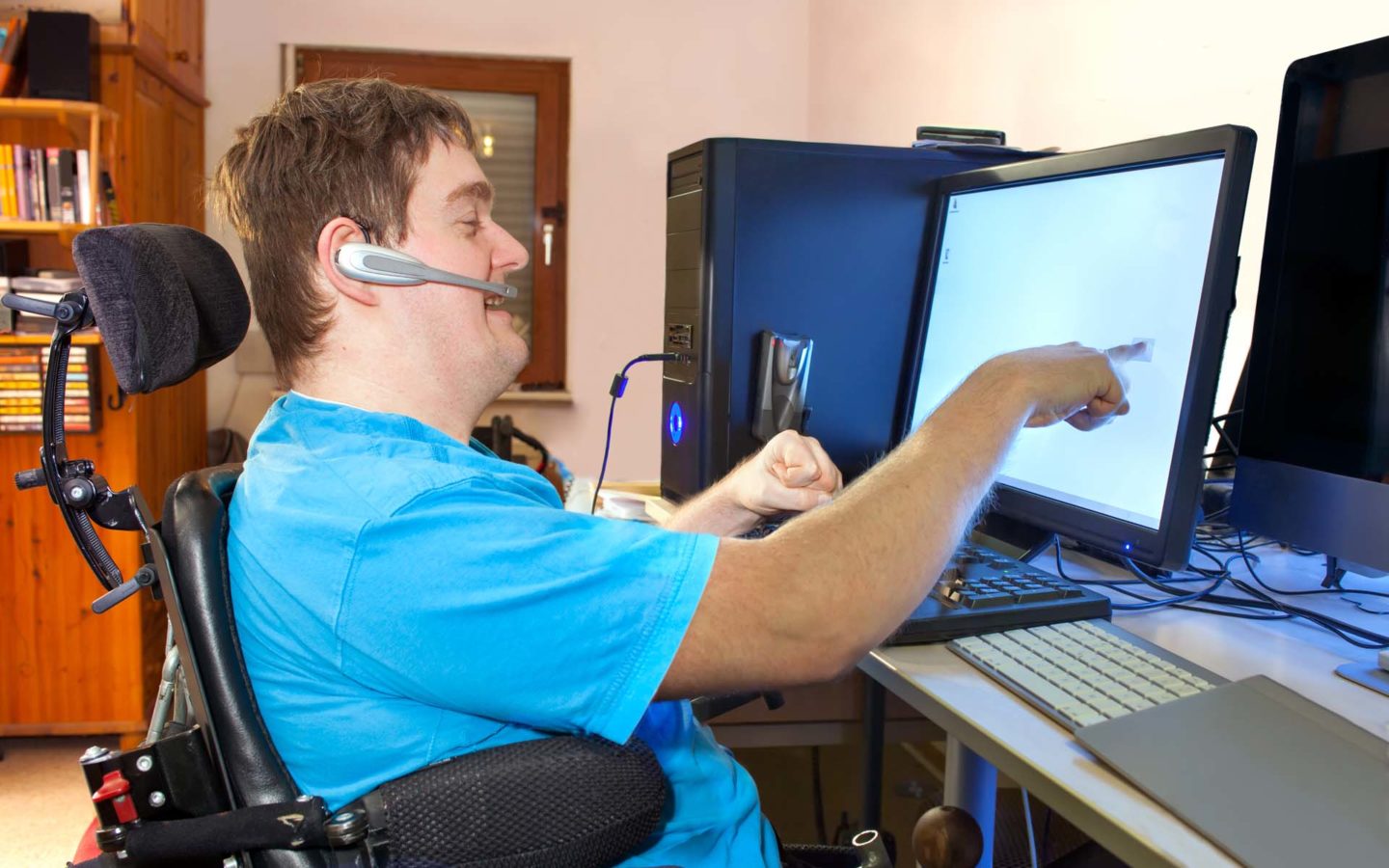
Our Technologies That Matter project, which spans Phase 1 and Phase 2 of the Centre, brings together many of the strands of our work through a sustained focus on lived experience. The project explores how people with experience of care and support use technology in their everyday lives, and what this means for living well.
Rather than starting from abstract ideas about what technology should do in care, the project centres the perspectives of people who draw on care and support. It focuses on how technologies are adapted, blended, and integrated into everyday life, and on the opportunities, risks, and exclusions that can emerge in the process. In doing so, it aims to generate evidence that moves beyond generalised narratives about ‘technology and care’ towards approaches grounded in lived realities, while also sharing learning from coproduction to support others undertaking similar work. This includes reflection on who shapes research agendas and whose voices are heard, explored further in our commentary by Kate Pieroudis (TLAP) on who asks the questions and who gets to answer.
Working with our Design and Methods Group, which includes people with lived experience of care and support, we co-designed a longitudinal research approach combining interviews, diaries, and creative methods. Data collection was completed in mid-2025, and the project is now in an extended period of analysis and outputs development.
What next?
From May 2025, the theme broadened its focus to explore innovation in care more widely – including new models of care and ways of working, alongside the use of digital technologies. Our future research is organised around three priority areas:
- the inequality implications of innovation and digital technologies
- the drivers and barriers to innovation and the use of digital technologies in care
- understanding and foregrounding lived experience
With PJ taking on sole leadership of the theme in August 2025, the work has remained firmly collective. Building on the foundations developed under Kate’s leadership and through our shared period of co-leadership, the Digital Care and Innovation theme continues to pursue research that is critical, collaborative, and grounded in lived experience.
Head to the Digital Care and Innovation theme page for more on our current team members and our work moving forward.