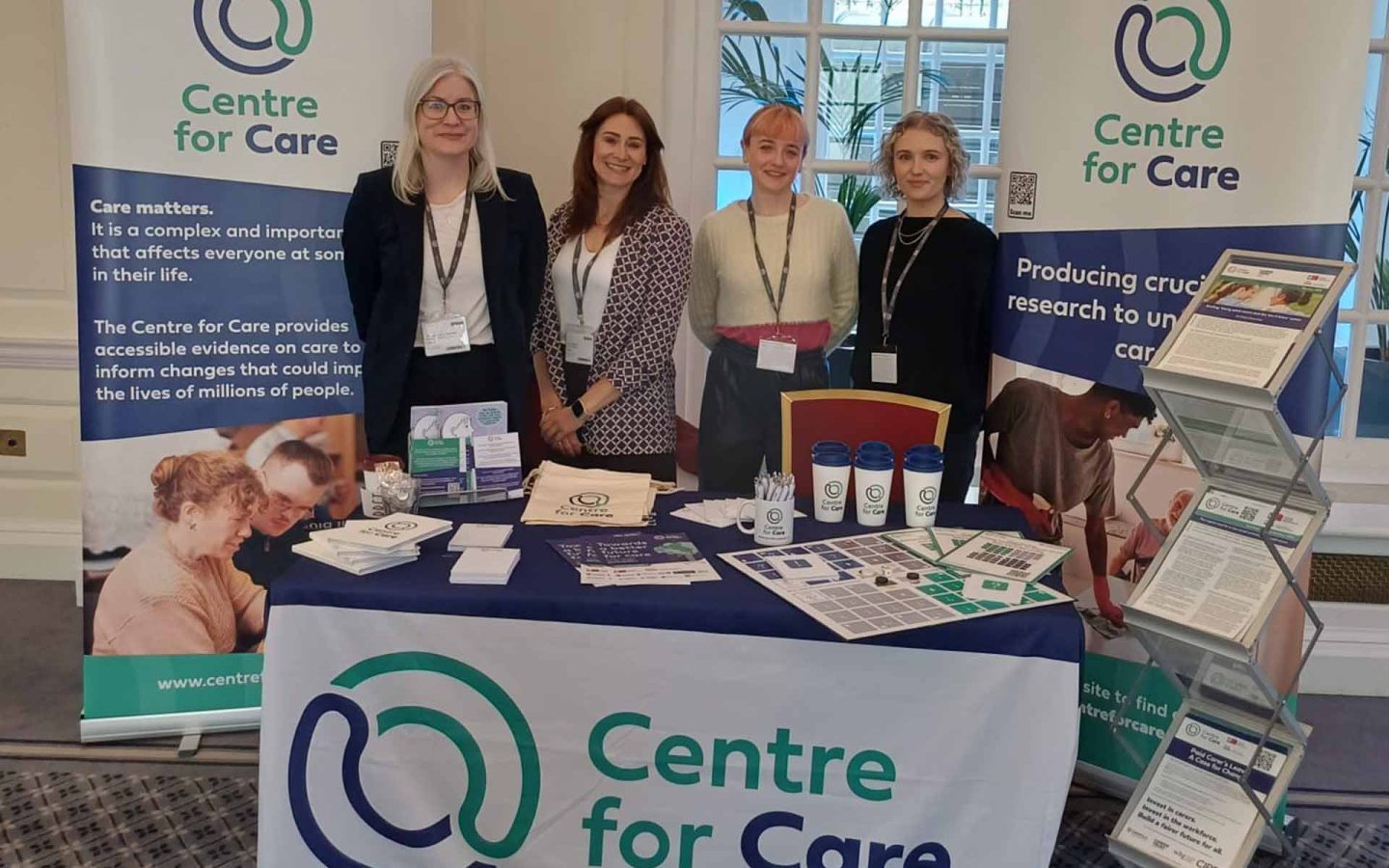
We were delighted to sponsor, attend and contribute to this year’s Carers UK State of Caring Conference 2026. The conference was an opportunity to bring together experts and leaders across different sectors to address critical issues facing policymakers, employers and service providers, and consider new thinking, trends and ways of working to help make life better for the UK’s 5.8 million carers.
This year’s theme was ‘Supporting carers in a changing world’. Given that the UK population is aging, the amount of older working-age unpaid carers is likely to increase; alongside a complex social and political landscape with funding for health and social care services too stretched to provide adequate support for carers, this is an acutely appropriate and timely topic.
Balancing work and care
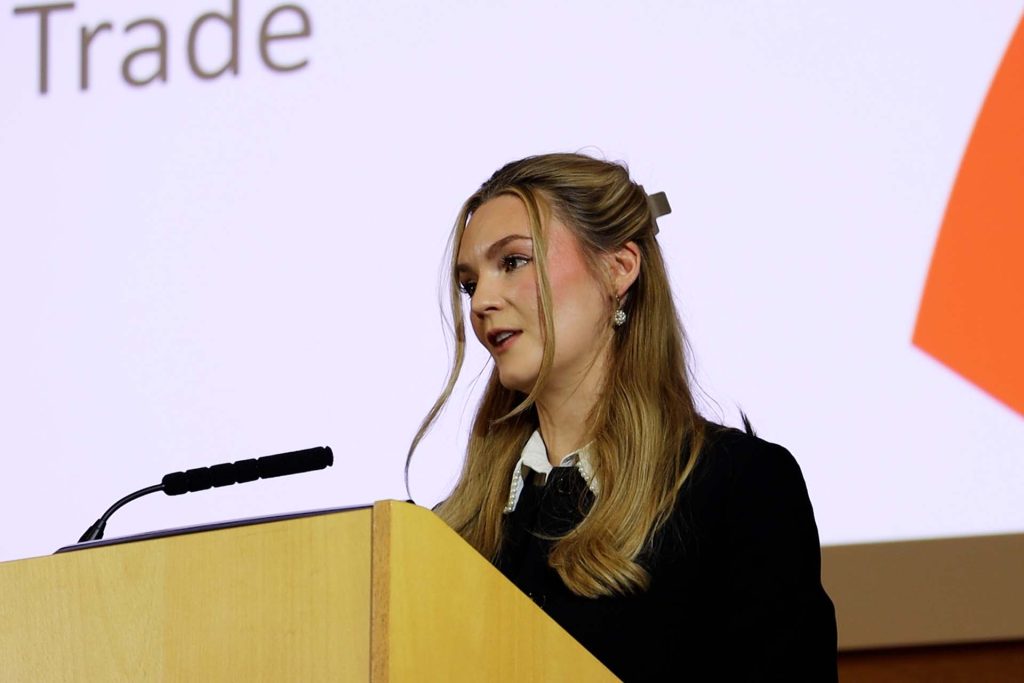
A major focus of discussions across the day examined the challenges unpaid carers often face when trying to balance paid work and care, with attendees asked to think about what more employers could do to support carers in employment. The Minister for Employment Rights and Consumer Protection, Kate Dearden MP, spoke about the Department for Business and Trade’s (DBT) consultation which seeks views from the public on a new process for employers handling flexible working requests, which should provide better protections for unpaid carers who seek support at work.
This is relevant given the recent release of Carer’s UK report, ‘Tipping Point’. The report provides a comprehensive breakdown of the ways in which unpaid carers are pushed to the ‘tipping point’ when trying to balance work and caring responsibilities, often having to give up employment to accommodate their caring role.
We spoke to many people at the conference representing their employers’ diversity and inclusion networks, who had an interest in understanding how to support carers at work. Centre for Care research in this area is summarised in a comic titled ‘Care in Comics: Care and Work’, which shows what good support at work looks like for unpaid carers and the impact it can have on their lives. We have found that the most important measures for supporting carers at work are: paid carers leave, enhancing and strengthening flexible working arrangements and implementing carer awareness training for employees. Employers can access support to make their organisation carer friendly from Carers UK via the Employers for Carers membership programme.
Digital and data in care
In her opening address Helen Walker, Chief Executive at Carer’s UK, highlighted that while Carer’s UK welcomes the inclusion of the ‘MyCarer app’ as part of the NHS 10 year health plan, there are prevailing issues of digital exclusion for unpaid carers which make it difficult for carers to harness the full benefits of the digitalisation of health and care services. The Centre for Care echoes this concern, with extensive research at the Centre and the University of Sheffield that identifies digital exclusion and digital poverty as significant barriers for unpaid carers to engage with the push for digital innovation in health and social care services.
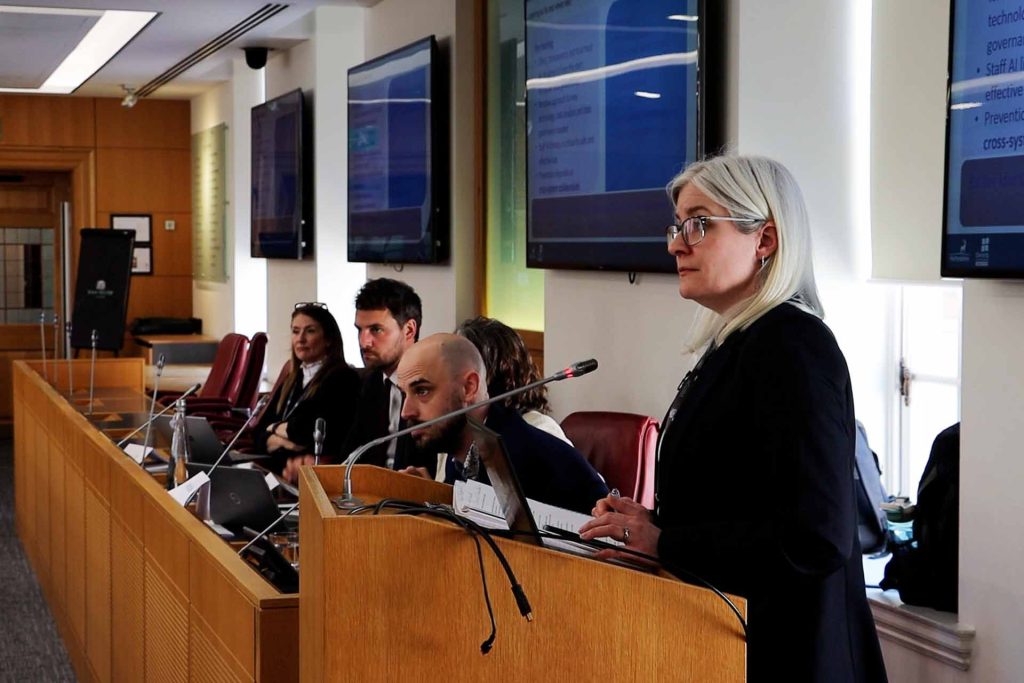
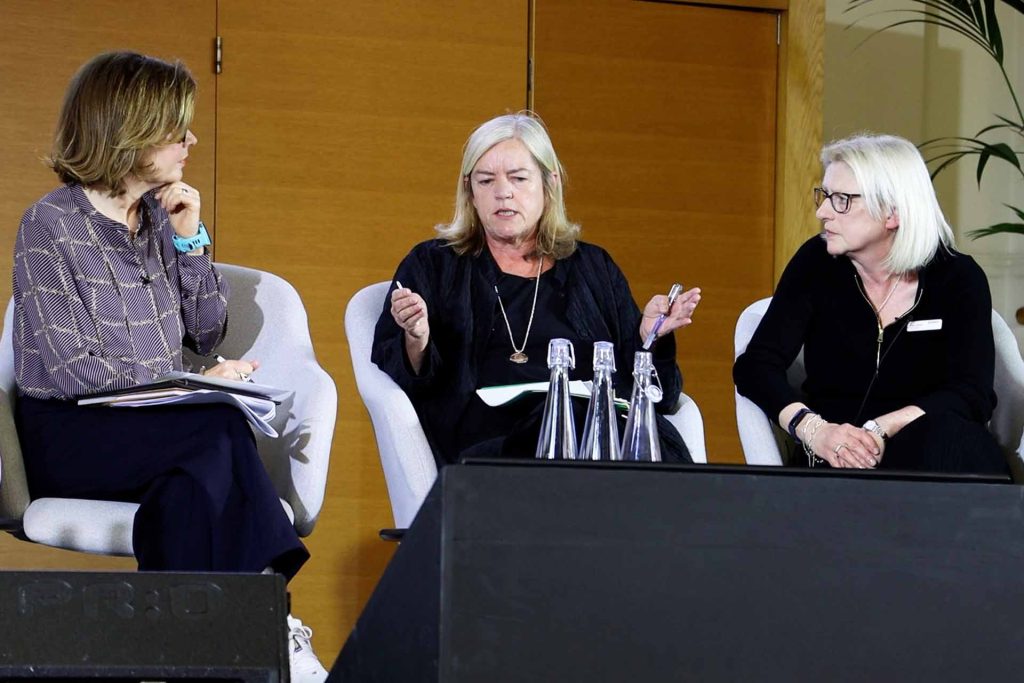
Our Director Kate Hamblin hosted a panel discussion on data and digital – looking at improving carers’ experiences, support and outcomes in the context of strong policy drivers towards digital investment in health and social care policy.
The discussion included representatives from Carers UK, NHS England and carers support services in Hertfordshire. The panel members identified the benefits of data systems that are more ‘joined up’ to improve data sharing across health and social care. For example, by using proxy services in the NHS to allow carers to support the person they care for via access to medical information. They also talked about the use of AI to support a proactive approach in identifying particular risk factors associated with carer burnout, in order to reach out to individuals demonstrating these risk factors and offer support.
Another example of utilising data to better understand the different needs of carers, in order to tailor support in specific localities, was discussed at the conference by our research associate Amna Sarwar. Amna’s work, alongside Sheffield City Council, has used data from different sources, inducing the Unpaid Care Dashboard, to identify areas of Sheffield with high levels of unpaid care. In these areas, evidence suggested that racial inequality and high levels of caring are linked with place-based inequalities. Amna worked with unpaid carers from different ethnic minority communities in these areas to understand how they care for their loved ones, and potential barriers for access to existing modes of support for unpaid carers in Sheffield. The data provides a justification for moving the carers service model away from a far-off locality to ‘trusted community centres’ where carers and the people they care for and support actually live.
This is an important example of the ways in which large datasets, such as the Census, can be utilised at a local level, alongside co-production, in order to better support carers with a diverse range of needs, and also to rethink existing models of service delivery in social care, to work better with the community.
We were grateful for the opportunity to facilitate positive conversations about the ways in which data sharing and digital innovation can be utilised to support unpaid carers.
Support for carers outside work
The conference heard from Baroness Casey in the opening plenary, her second public speech since she addressed attendees at a Nuffield Trust event earlier this year. Baroness Casey highlighted the complexity within health and social care systems that exacerbate the challenges faced by unpaid carers, particularly the complex and inflexible design of Carer’s Allowances which makes it hard for carers to receive the financial support they are entitled to.
Baroness Casey’s reference to the inadequacy of Carer’s Allowance highlights that there are important systematic changes needed in order to better support carers’ financial wellbeing, alongside better employment support for carers. Research by the Centre for Care found four key risks to financial security and wellbeing for unpaid carers as a result of their caring responsibilities:
- Direct expenses (travel, home adaptations)
- Employment challenges (reduced hours, job loss)
- Health and wellbeing is influenced by financial stresses
- Barriers to accessing support to benefits which are often inadequate and stressful to claim (eg Carer’s Allowance).
The Centre for Care’s call for a co-produced National Carers Strategy highlights the systematic changes that a national strategy should consider in order to better provide financial support for unpaid carers who can and cannot work, while also ensuring their emotional wellbeing is protected. We were therefore pleased to see the announcement that a cross-Government meeting, chaired by Secretary of State for the Department of Health and Social Care, Stephen Kinnock MP, is working to create an action plan for unpaid carers to be published within the year.
We were encouraged by the enthusiasm shown by employers, carers support services and the charity sector to better support unpaid carers at the Carers UK State of Caring Conference. We look forward to furthering these discussions across the sector to make sure unpaid carers feel valued and financially secure, regardless of their circumstances.
About the author

Lucy is an Impact Associate in the Centre for Care, working closely with Fay Benskin and academics to improve the impact of research in decision making processes for key stakeholders across government policy and third sector organisations.