The final report of the Timms Review of Personal Independence Payment (PIP) makes clear the urgent need for a fairer and more humane system that better recognises the diverse circumstances of disabled people. Embedding the principles of dignity, choice and control in DWP has the potential to make vast improvements in the experiences of all claimants and this is welcome.
However, the Government must also recognise the interdependence of PIP and carers’ benefits and the additional costs of caring.
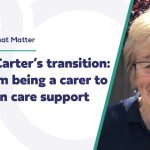
Our new animation, The Lifelong Cost of Caring, based on Centre for Care research brings the stress and hardship caused by the benefits system into focus through Cam’s personal story. His story highlights the difficulties families can face in securing the financial support they are entitled to.
The landmark report echoes our research findings about the substantial role carers often play in supporting people to complete PIP claims, manage the high administrative burden, and navigate adversarial and sometimes traumatising assessments and appeals. However, it is striking that, while the Timms Review recognises the importance of PIP as a gateway benefit for carers, Carer’s Allowance is explicitly mentioned just once in nearly 150 pages. There is relatively little consideration of the wider and often lifelong consequences of caring for family members, partners or friends.
PIP decisions do not affect only the person making a claim. They can have profound consequences for those around them, including people whose own opportunities, careers, financial security and wellbeing are shaped by caring. In addition, around 150,000 disabled carers claim both Carer’s Allowance and PIP; research finds that many disabled carers conceal their caring responsibilities because they are worried that decision-makers will deny their PIP claim on this basis.
If we are serious about supporting disabled people to live with dignity, independence and choice, we must also recognise the contribution of unpaid carers and the costs they bear.
Please take a couple of minutes to watch Cam’s story. It highlights the often unseen impact of caring on people’s lives, education opportunities, careers and futures, and reminds us why the experiences and needs of unpaid carers must be part of the wider conversation about disability and support.
About the authors
Maxine’s PhD research was a qualitative exploration of the dynamic nature of teachers’ professional identity and associations with professional commitment. A grounded theory approach empowered the voices of primary school teachers in understanding positive and negative influences on their professional identity across different life and career stages. Her work brought together current literature within Education and Social Psychology to develop a theoretical model of teacher career, considering the development of individual, relational and collective identities and associations with career decisions and commitment to the teaching profession. Maxine has also worked collaboratively on projects concerned with the development and maintenance of relationships in school communities, and the influence of those relationships on teacher resilience, wellbeing and subsequent career decisions.

Louise is Associate Professor of Social Policy in the Department of Social Policy, Sociology and Criminology at the University of Birmingham, and Director of the Centre on Household Assets and Savings Management (CHASM). Louise’s work focuses on understanding and addressing the risks, challenges and inequalities associated with the financialisation of later life in three key policy areas: housing equity, pensions and long-term care. Her research has attracted widespread press coverage (FT Advisor, Telegraph, Guardian, among others) and has been instrumental in influencing policy and practice developments in the later life financial services and related sectors. Her social care research includes: Finding and Funding Social Care: A qualitative study of the experiences of self-funders; Home investments and aging-in-place: comparing policy contexts and household practices in the UK and the Netherlands, and The Development of a Decision Support Tool for Older People who Pay for Social Care. She also works closely with the Long-term Care Working Group of the Equity Release Council on the role and relevance of housing wealth in care funding solutions.

Becky’s research explores unpaid carers’ and disabled people’s experiences of the welfare benefits system, the role of welfare rights services, and the financial wellbeing of kinship families. She is committed to producing evidence to that improves policy and practice.