Representatives from the Centre for Care attended the Labour Party Conference in September 2026. This attendance was grounded by the Centre for Care’s mission: to share our research with a wide range of stakeholders and to bring evidence based insights to the national political debate.
From the beginning of the conference, care was a topic of discussion and gained a huge amount of attention. The Prime Minister Andy Burnham addressed the Yorkshire and Humber reception on Saturday evening and confirmed the Labour Party was going to “create a National Care Service in the 21st Century” to “end the scandal where people who care for people’s parents are on poverty wages – it’s not acceptable” and “end the situation where people who’ve worked all their lives lose everything the moment they enter that care home.”
The dialogue on care continued with the Prime Minister speaking to the BBC about the future of social care with ambitions for a National Care Service, bringing renewed attention to how care should be funded, organised and delivered.
The conversation across the Fringe events, roundtable sessions and conference halls showed a notable increase in momentum on the topic of care compared to last year’s conference. However, sector optimism remains laced with questions about how bold political ambitions will be turned into practical delivery, and topics so far missing from the proposed reforms.
Here we share our reflections on the key topics that emerged during the conference and the political priorities around care.
Care equity: Building a fairer care system
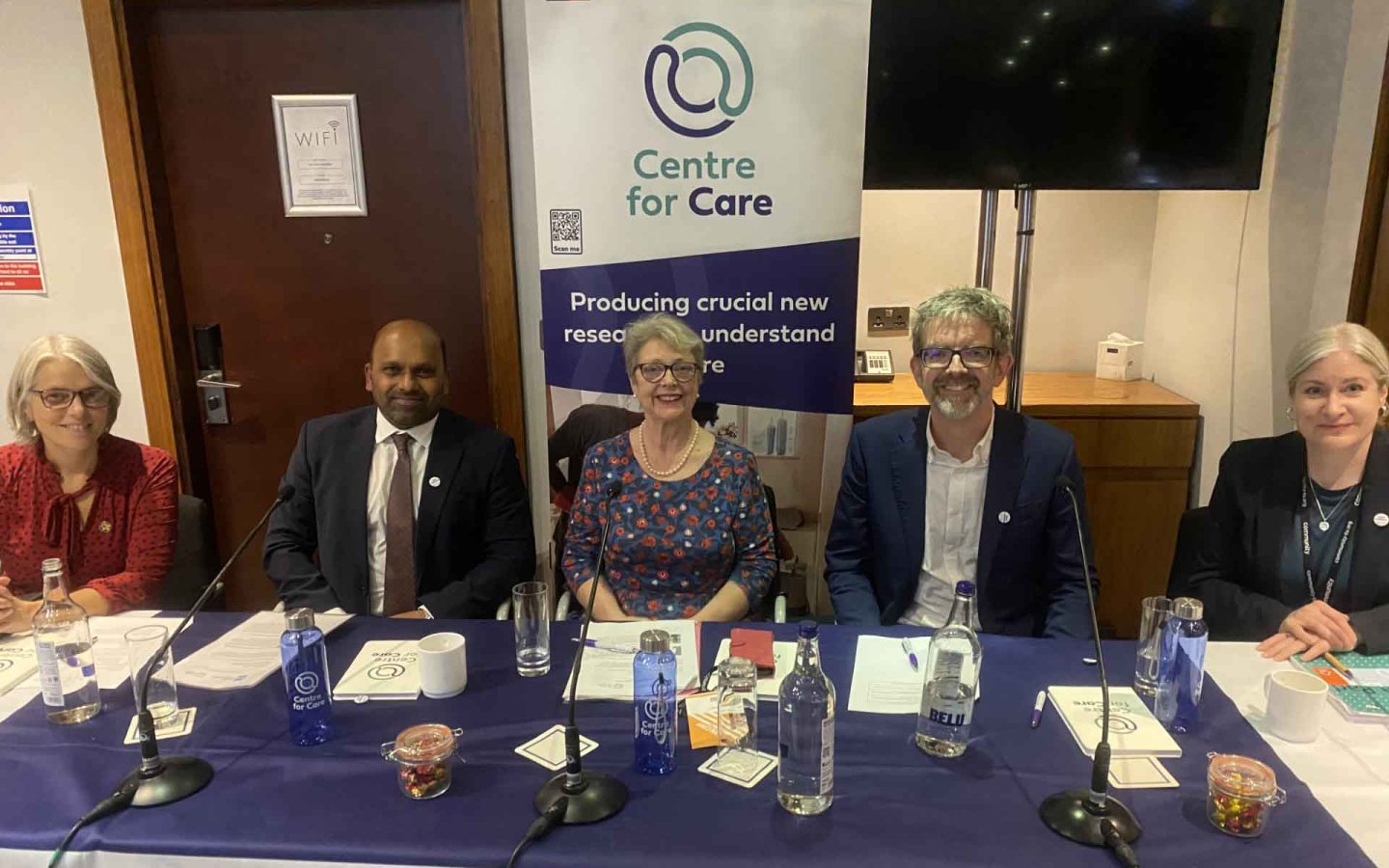
The Centre for Care and our partner the Social Care Institute for Excellence (SCIE) co-hosted a fringe event; ‘Placing care equity at the centre of adult social care reform’. We were joined by an esteemed panel of speakers including ADASS President Phil Holmes, Sojan Joseph MP, Chair of the APPG for adult social care, Anna Dixon MP, Chair of the APPG for carers and Professor Kate Hamblin, Centre for Care Director. The discussion was chaired by Baroness Glenys Thornton, SCIE Chair elect.
Panellists discussed the inequalities people currently experience in accessing care and support, and what needs to change as the Government develops its plans for reform. The discussion highlighted the impact of unmet, or inappropriately met need on people who draw on care and those who support them. Professor Kate Hamblin reflected that “Inequity in social care is systemic – it is structurally made and can therefore be unmade. The design and delivery of adult social care and other related policy areas such as welfare benefits affect disabled people, older adults, paid care workers, and unpaid carers in ways that are unfair.”
Discussions also highlighted how inequities created by the current system place unsustainable pressure on unpaid carers and, as highlighted by the Prime Minister in conversation with the BBC, poverty wages and low esteem are widespread across the care workforce. There was a spotlight on the importance of prevention and early intervention – but concerns around the lack of acknowledgement for the preventative key role played by invisible parts of the care ecosystem – and the need to ensure people have choice and control over their care.
National social care reform vs local devolution
The Prime Minister stated that the Labour government will create a National Care Service and as the Casey Commission timescales have been accelerated, many panel discussions and conversations focussed around how meaningful change could be achieved. Research from the Centre for Care highlights that the core tension in social care reform is balancing national equity with local responsiveness. National direction is needed to set out clear rights, eligibility criteria and guidance to avoid variation that occurs when neighbouring local authorities and professionals interpret statutory duties so differently that a person loses support simply by crossing a council boundary. A key example is how Social Care Charging is administered and Disability-Related Expenditure (DRE) is calculated, as highlighted in Centre for Care research, where variations create punitive financial extractions in poorer areas. National consistency is needed here to protect minimum income thresholds and standardise charging rules. For the care workforce, our research highlights that a national framework for care worker pay, minimum training standards, and pension protections are necessary to halt workforce precarity and high turnover.
But, we know that populations vary by area, and discussion around Neighbourhood Health featured in many of the events that we attended over the four day conference. Experts spoke about harnessing evidence and the use of data to inform activity locally to ensure a ‘hyper local’ approach to truly understand and meet the needs of the community. We heard from local councillors including Health and Wellbeing Board members about their limited time and resources to take meaningful action, but that despite these challenges they showcased excellent good practice and examples of co production.
Unpaid care featured in discussions and Fringe events much more than at last year’s conference. Across several sessions, Anna Dixon MP and Chair of the APPG for carers highlighted that unpaid care is a gendered issue with more women providing unpaid care, at an earlier age and for longer. This can impact their health, pension, career prospects and ability to remain in employment. The Carers UK fringe event ‘balancing work and unpaid care – supporting unpaid carers to achieve their potential’ brought a spotlight on the benefit of paid carers leave and introduced the shocking figures that from recent Carers UK research that 1,500 people per day are leaving work to care.
Carers Trust fringe event ‘building a fair deal for unpaid carers’ was an opportunity to hear from Liz Sayce who shared insights from the Sayce review and Minister Stephen Timms who reflected on the progress of addressing the overpayment scandal, discussion was centred around the multiple disadvantages that carers may face and how they could be addressed. Sir Timms reflected on the recent consultation on the introduction of an earnings taper to Carer’s Allowance. In the Centre for Care’s response to this consultation, we highlighted the need for more fundamental reform of Carer’s Allowance to ensure it aligns with the needs of carers today and no longer creates disincentives around work and education. Our work has also underscored the need for change at the Department of Work and Pensions (DWP) to rebuild trust and reduce the harm experienced by carers when attempting to access their welfare entitlements.
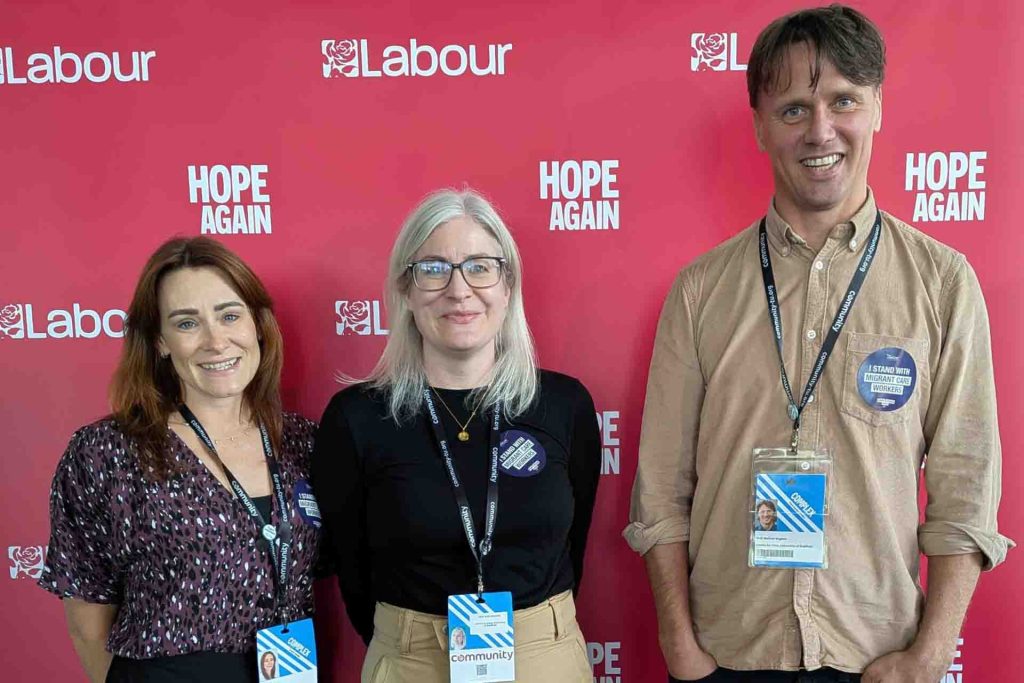
Combining the focus on Neighbourhood Health and unpaid carers, Centre for Care Impact Specialist Fay Benskin contributed to a roundtable event hosted by Carers Trust and Liverpool City Council. The roundtable focussed on how to ensure unpaid carers are at the heart of the fast-moving policy and practice landscape. Fay shared research which highlighted the triple penalty that many unpaid carers experience: to health; the financial strain, and isolation. She introduced projects where these experiences have been approached and understood locally to tailor support and services for unpaid carers.
Looking Ahead
The increased volume of dedicated care events at this year’s conference is a promising sign and the ambition for a National Care Service, backed by workforce reform and local integration, provides a direction of travel.
However, translating these speeches into long-term impact requires turning policy goals into appropriately resourced, local action. The Centre for Care will continue to provide robust evidence to ensure that unpaid carers, workforce equity, and lived experience remain central to every stage of social care reform.
About the author

Fay is the Impact Specialist in the Centre for Care, working with academics and external partners including stakeholders, voluntary sector organisations and policy makers to mobilise research findings to achieve impact beyond academia. Her role is to work with our researchers to plan for impact. Fay identifies partnerships and explores collaborative opportunities to ensure research findings are widely shared, to influence practice and policy.