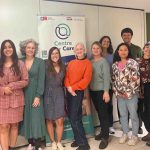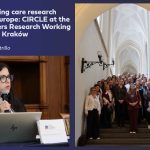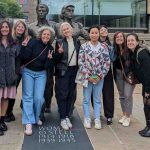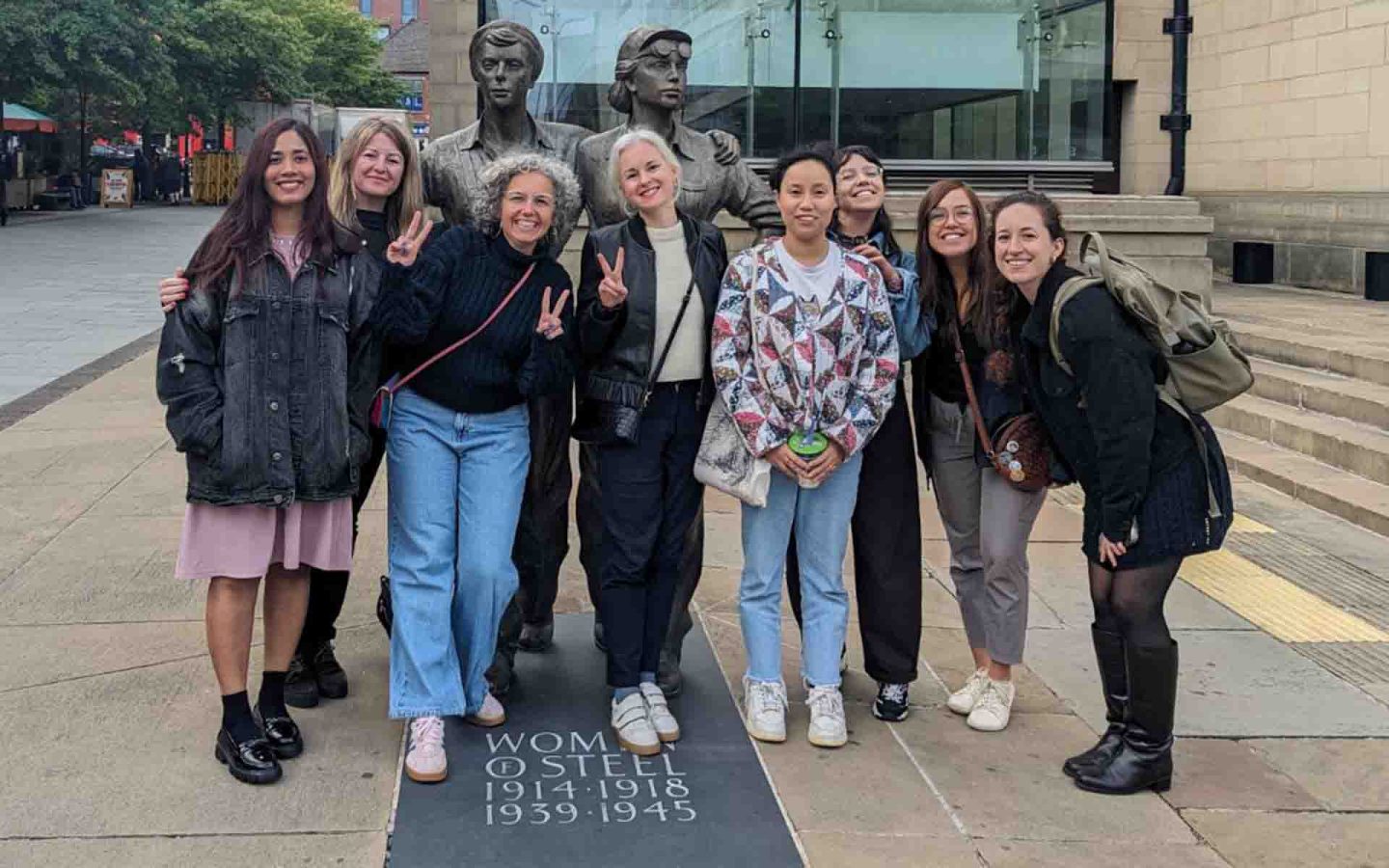
The Doctoral journey is hard. It involves becoming very closely acquainted with a particular – often very specific – topic. Opportunities to spend time with people working on related questions, and grappling with similar challenges across diverse international contexts, are rare to say the least. The third Centre for Care Summer School provided just such an opportunity, bringing eleven doctoral researchers from universities in Australia, Germany, India, Sweden and the UK to Sheffield on 7–11 September 2026.
The summer school was a real treat. This year’s doctoral fellows shared incredibly innovative and impactful projects together. Their projects spanned family relationships, disability, paid and unpaid care, migration, digital technologies and welfare systems. Despite differences in settings and research questions, there was much shared ground: similar methods and theoretical approaches; common practical and ethical dilemmas; a shared emphasis on lived experience and coproduction; and a commitment to understanding and addressing inequalities in care – as well as recurrent challenges faced in the doctoral research journey. Students joined both a summer school cohort and a wider Centre team, in which care research is at the heart of daily work and discussion.
The emphasis in our summer school is always on sharing and learning as community. Each student had time to present their research, discuss it with the group and meet individually with an assigned Centre mentor. These sessions offered opportunities to work through questions and dilemmas, and to hear how others were approaching comparable issues. They also brought different contexts into conversation: how families navigate support systems, whose contributions to care are recognised, and how policy shapes everyday relationships and responsibilities.
The wider programme provided further opportunities to develop these connections. Dr Mark Wilberforce and Martha Ward, from the University of York, led a keynote and workshop on values-based recruitment in homecare, drawing on their Curious About Care research. Sessions with Centre colleagues explored theory, data and methods, and the dilemmas of co-production. A reading group and discussions about digital communication and writing from a thesis connected these questions to the practical work of doing and sharing research.
We had a fantastic week getting to know each other and working together. We all took an interest in one another’s projects, shared suggestions and spoke openly about difficulties as well as progress. Mentors and other contributors offered thoughtful feedback and space to explore questions. There was room for uncertainty and constructive challenge. Meals and activities around Sheffield also gave everyone time to get to know one another beyond their research presentations.
We particularly want to thank Centre Manager Kelly Davidge and Centre Administrator Sarah Givans. Their planning, organisation and attention throughout the week helped make it the welcoming, supportive and productive environment that was central to the experience of the summer school. They created a wonderful environment and safe space that allowed us to be authentic and vulnerable together.
This was the third and final summer school supported through our initial Economic and Social Research Council funding. We are grateful that this funding has enabled us to bring doctoral researchers together from across the world over three years. Our thanks also go to everyone who has contributed as a student, mentor, speaker or organiser. Building connections among people researching care has been a valuable part of the Centre’s work – and so we hope this will not be our last summer school.
About the authors
Nathan Hughes is Professor of Adolescent Health and Justice, co-director of CIRCLE – the Centre for International Research on Care, Labour and Equalities – at the University of Sheffield.
He is Deputy Director of the Centre for Care, and lead for the Children and Families theme. This reflects his broad research interests in effective support to vulnerable young people, including those affected by health and developmental difficulties and those within the child protection system.

Matt is a Professorial Research Fellow and a Co-Investigator at the Centre for Care and is based at the University of Birmingham.
More posts